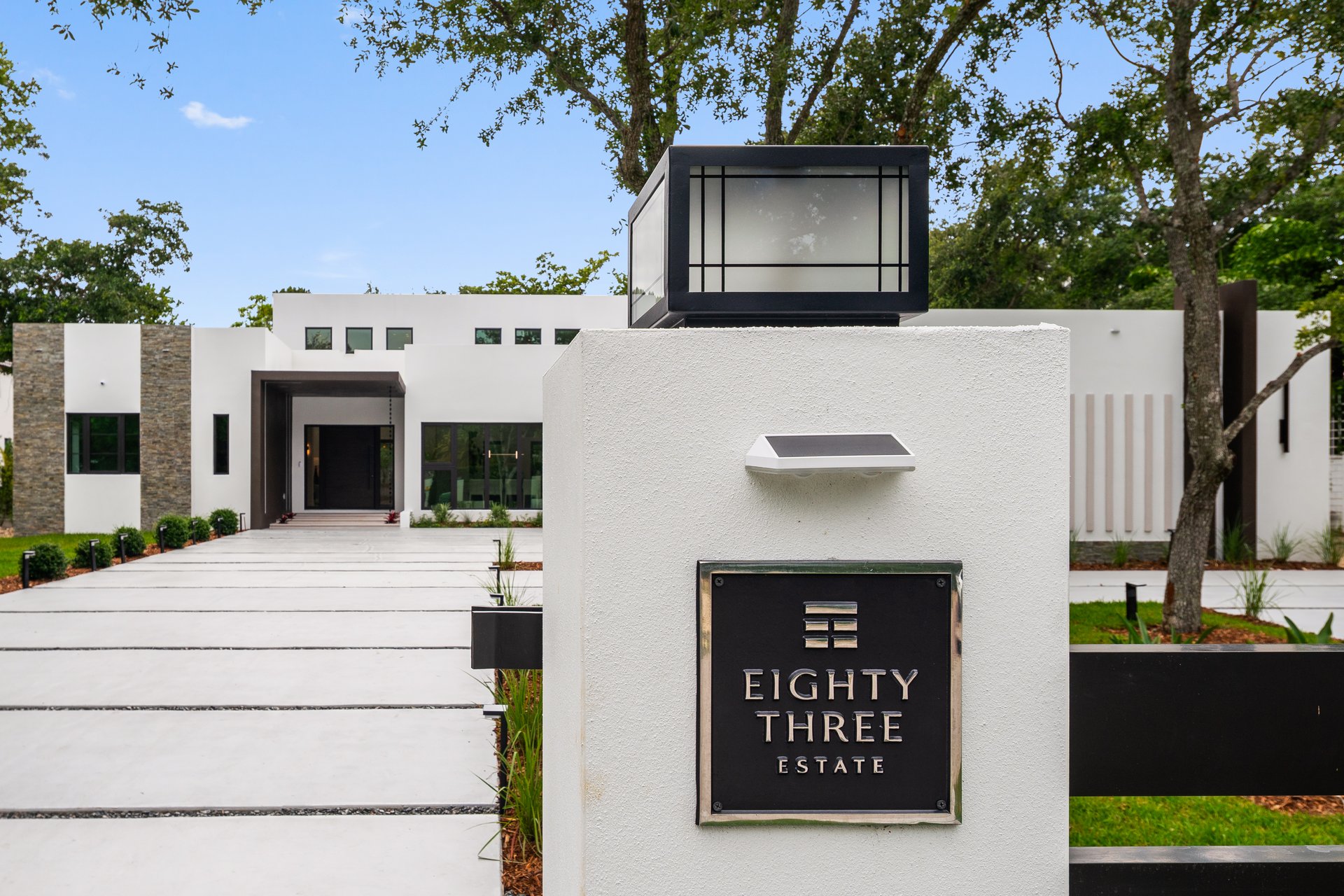
An interview with Hugo Subotovsky, Developer and Mastermind behind 6200 SW 83rd Avenue in Miami.
1. What problem were you trying to solve for today’s luxury buyer when designing and building Eighty Three Estate?
The Miami luxury buyer today faces frustrating choices: purchase an older home and undertake a major renovation, buy a new home that often feels oversized, or select a home that does not align with how the prospective buyer actually lives.
Eighty Three Estate was designed to offer a different solution. From the beginning, my goal was to create a residence that combines the quality and permanence of a custom estate with the practicality required by modern lifestyles. Today’s homeowners need spaces that support entertaining, working from home, family life, and privacy…all without sacrificing beauty or comfort.
I focused on creating a home that lives effortlessly. The layout is intuitive, the indoor and outdoor spaces function as one, and every room has a clear purpose. At the same time, I incorporated modern infrastructure, smart home capabilities, security, and low-maintenance materials that allow owners to spend more time enjoying the property and less time managing it.
In many ways, Eighty Three Estate was designed not only for how people live today, but for how they will live ten years from now.
2. Many new homes are being built throughout Miami. What decisions make Eighty Three Estate different?
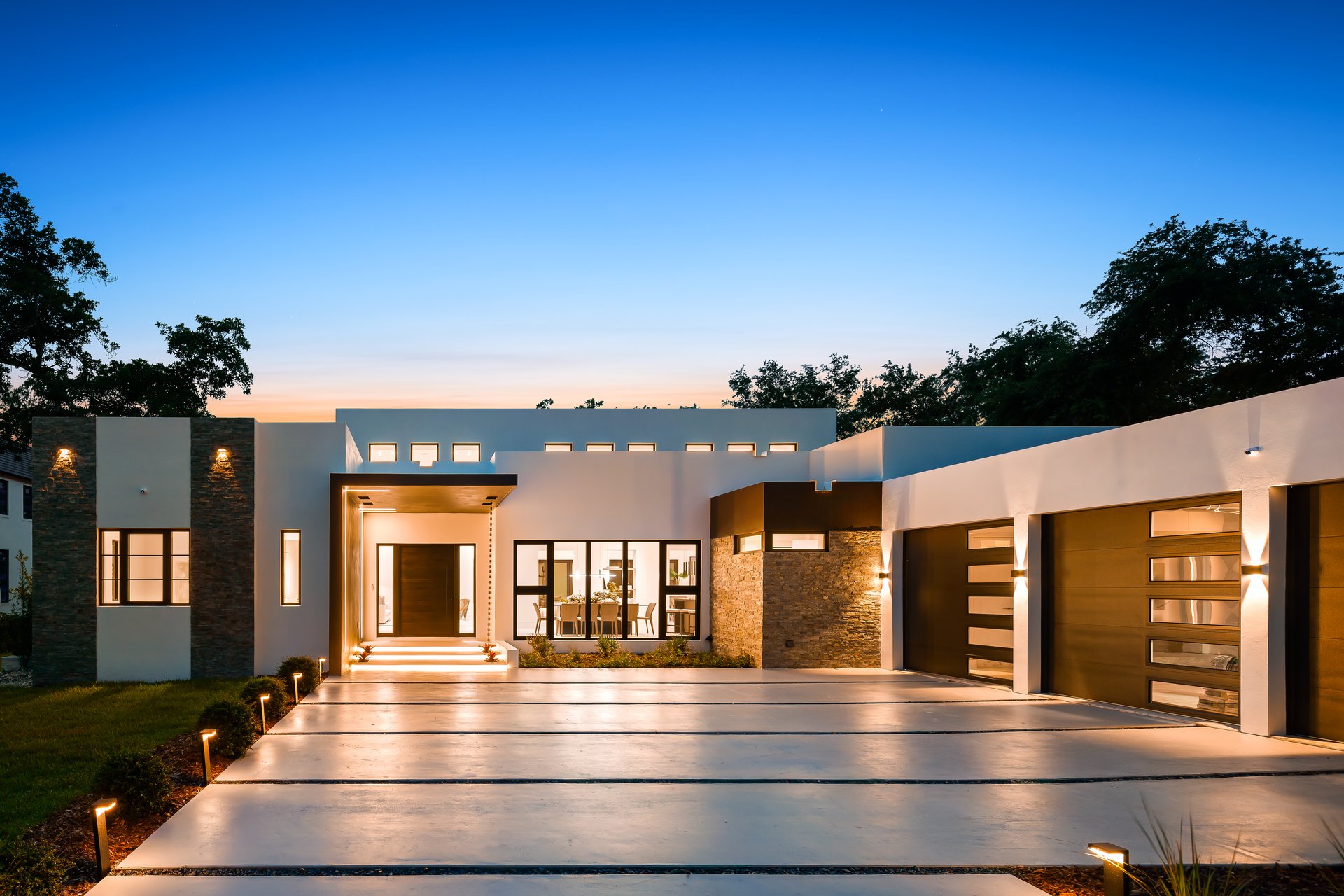
The most distinctive decision was choosing to build the entire residence on one level. The one acre lot made this easier.
Luxury homes are often designed around maximum square footage rather than maximum livability.
I took the opposite approach. By creating a single-story estate, we eliminated the daily inconvenience of stairs while establishing a stronger connection between every interior space and the outdoors.
The architecture emphasizes proportion rather than excess. High ceilings, clerestory windows, expansive glass, and carefully framed views create a sense of openness and light without making the home feel overwhelming without losing each space’s function.
The floor plan was designed around flow. Formal and informal spaces connect naturally, creating an environment equally suited for quiet family evenings or large-scale entertaining. Every major room maintains a visual relationship with the exterior, allowing natural light and landscape to become part of the living experience.
The result is a home that feels larger than its square footage because every space is purposeful and connected.
3. What are some of the details homeowners may never notice immediately, but will appreciate every day?
Many of the most important decisions are the ones that owners rarely see.
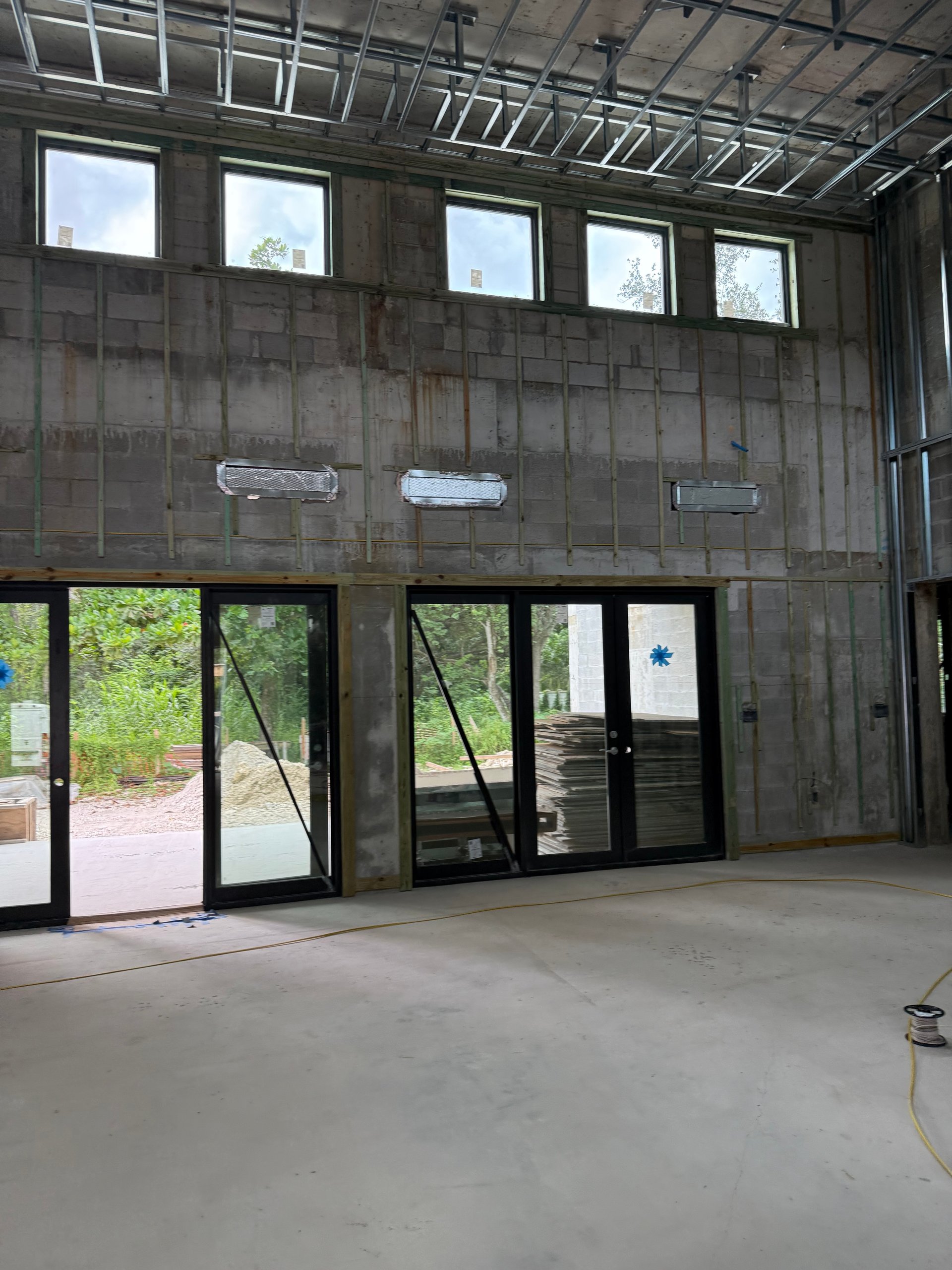
The home was built with as a reinforced concrete structure, including roof system designed for durability, longevity, and peace of mind. This should translate to reduced insurance costs.
All interior partitions were insulated to enhance privacy and reduce sound transmission between living areas and bedrooms.
The infrastructure was planned with the future in mind, including provisions for smart home integration, advanced security systems, and generator readiness. The floor and wall tiles were carefully cut and installed to deliver a seamless continuity.
We also paid close attention to mechanical systems, energy efficiency, and material selection. The objective was not simply to build a beautiful home, but to create a residence that will continue performing at a high level for decades.
These are the kinds of features that rarely appear in photographs, yet they contribute significantly to everyday comfort and long-term ownership satisfaction.
4. Why did you choose Glenvar Heights for this project?
Location was one of the most important decisions in the entire project. The rare finding of an acre lot in a dead end street was a leading reason.
Glenvar Heights offers something increasingly rare in Miami: large residential properties in a central location with relatively low density. Residents enjoy convenient access to Coral Gables, Coconut Grove, South Miami, Brickell, and Miami International Airport while still maintaining a sense of privacy and space. This is increasingly difficult to find in neighboring areas.
I believe the Glenvar Heights is one of Miami’s most underappreciated luxury residential markets. As buyers continue seeking larger lots and more private settings without sacrificing convenience, Glenvar Heights becomes more attractive and yields great potential to increase value.
The area has evolved significantly over the past several years, and I believe it will continue to benefit from Miami’s long-term growth. For homeowners, that means enjoying a unique lifestyle today while owning real estate in a location with compelling long-term desirability.
5. If you were giving a private tour to the future owner, what feature or space would you be most excited to show first, and why?
I would begin in the main living area and allow the experience of the home to unfold naturally.
The moment visitors enter, they immediately understand the relationship between the architecture, the natural light, and the outdoor spaces. The clerestory windows bring sunlight deep into the home while maintaining privacy, and the soaring ceiling heights create a sense of volume that photographs simply cannot capture.
From there, I would move toward the kitchen, entertaining bar, and dining area. These spaces were designed as the social heart of the residence. Whether hosting a formal dinner party or enjoying a casual evening with family and friends, the flow feels effortless.
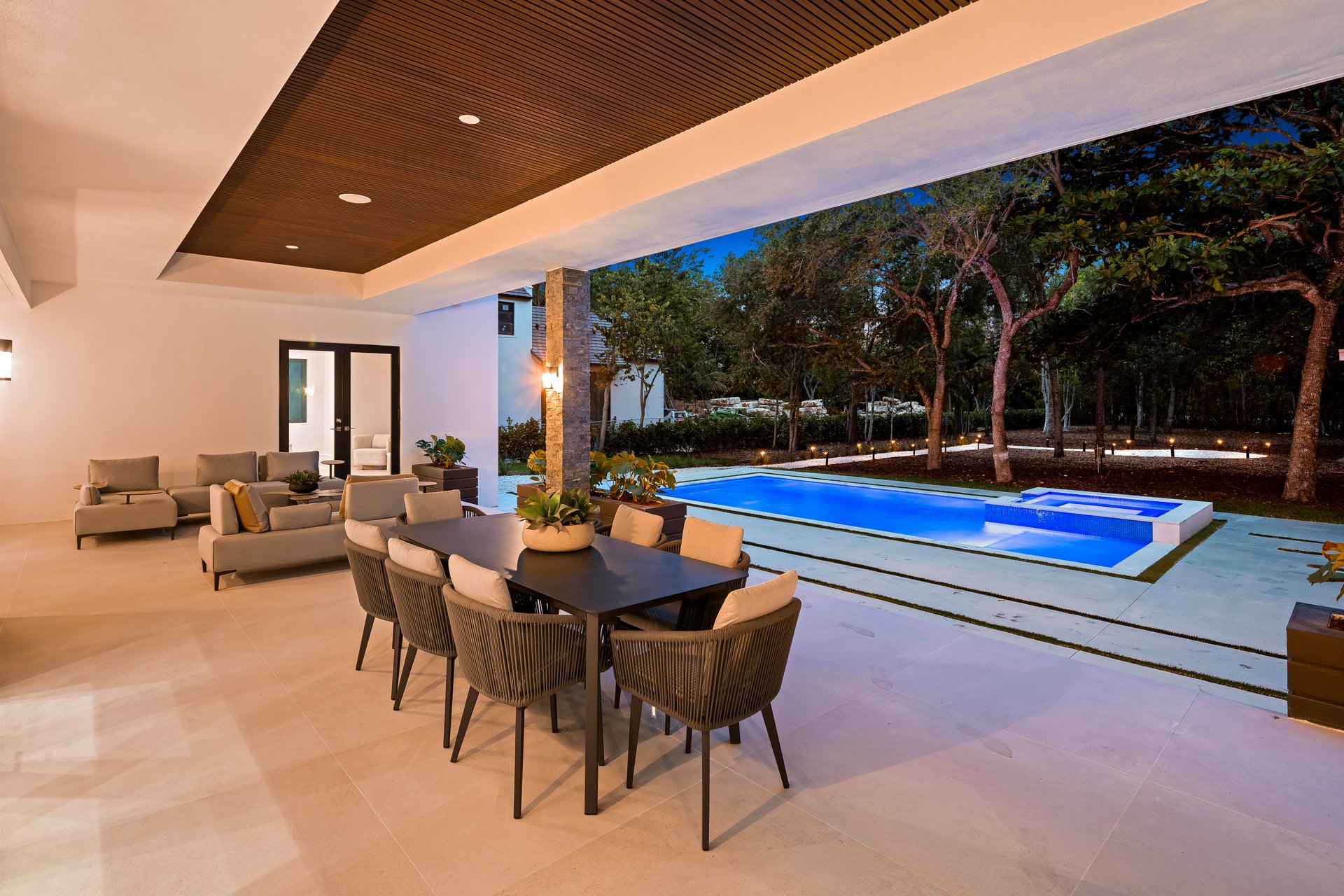
Finally, I would open the doors to the covered terrace and outdoor living spaces. That transition between inside and outside is one of the defining experiences of the home. It is where architecture, landscape, and lifestyle come together.
Bonus Question: What will this home feel like five or ten years from now?
Our objective was to design a home that would age gracefully rather than follow short-term trends. It is not trendy. The mix of stucco and stone provides a sophisticated aesthetic that will withstand time.
The architecture relies on clean lines, balanced proportions, natural light, and timeless materials rather than decorative elements that may feel dated over time. The infrastructure was designed to accommodate evolving technology, while the construction methods and materials were selected for durability and longevity.
Most importantly, the home was designed around human comfort rather than a fad. Great homes remain desirable because they function exceptionally well, not because they follow a trend.
Ten years from now, I believe Eighty Three Estate will feel exactly as it does today: modern, sophisticated, comfortable, and relevant. That is ultimately the definition of timeless design.