By Realtors Carole Smith and Cristina Formosa | Miami Luxury Real Estate Specialists
Artificial intelligence has made real estate information more accessible than ever. Buyers and sellers can now pull directional market trends and neighborhood statistics for almost any property in Miami within seconds.
But anyone who has actually bought or sold a home here knows something important: Miami doesn't behave like a spreadsheet.
This guide breaks down exactly where AI falls short — and why local expertise still delivers results that algorithms simply can't replicate, especially in neighborhoods like Coral Gables and Coconut Grove.
Table of Contents
- Miami Is a City of Micro-Markets
- Market Psychology Moves Miami Real Estate
- Lifestyle Details Matter More Than Algorithms
- Off-Market Opportunities Live Outside the Data
- How to Use AI Tools Wisely — and When to Call a Local Expert
1. Miami Is a City of Micro-Markets
Most AI tools analyze real estate by ZIP code or broad neighborhood averages. That approach breaks down quickly in Miami.
In Coral Gables, two homes with similar square footage can sell for dramatically different prices simply because one sits on a shaded, low-traffic street near a preferred school zone while the other doesn't. In Coconut Grove, elevation, walkability, and neighborhood feel often outweigh interior finishes entirely.
Buyers here don't just ask, "How big is the house?" They ask, "What does it feel like to live here?"
AI sees averages. Experienced Miami agents understand the subtle, street-level forces that push those numbers up — or quietly hold them back.
Pro tip: When evaluating comparable sales in Miami, always ask your agent to walk you through why two similar homes sold at different prices — not just that they did.
2. Market Psychology Moves Miami Real Estate
AI can analyze past trends, but it can't read the room.
Miami is heavily shaped by buyer confidence and timing. Snowbird patterns, relocation waves from the Northeast and California, and seasonal rhythms all influence demand in ways that don't always surface in historical data. A seasoned local professional can sense when momentum is building — often months before the numbers reflect it.
This is why some listings perform better in January than in spring, why certain homes ignite bidding wars while similar ones stall, and why pricing strategy looks different in a relocation market than a local-buyer market.
These shifts are emotional as much as financial. Algorithms don't feel them.
Key insight for sellers: In Miami's luxury segment, the right pricing window can be worth tens of thousands of dollars — and it's rarely predictable from data alone.
3. Lifestyle Details Matter More Than Algorithms
AI can't walk a property at different times of day. It doesn't sit in school drop-off traffic, notice which streets catch a breeze, or register which backyards turn unusable in afternoon summer heat.
In Miami, lifestyle details directly affect value — and these details matter most in high-end neighborhoods:
- Sun and shade patterns — especially for pools and outdoor living
- Flood zone nuance — two adjacent streets can have very different FEMA designations
- Noise and traffic patterns — a calm street at noon may be chaotic at 8 a.m.
- Privacy — lot orientation, tree canopy, and setbacks aren't always visible in listing photos
- Walkability — not just a score, but the actual experience of the street
These realities don't live in databases. They live in firsthand experience of the market.
4. Off-Market Opportunities Live Outside the Data
Some of the best homes in Miami never appear online at all.
Private exclusives, off-market listings, and "coming soon" properties often circulate quietly through trusted professional networks long before they reach the MLS — if they ever do. AI can only analyze what's publicly available. It has no access to conversations, agent relationships, or the quiet signals that a homeowner may soon be ready to sell.
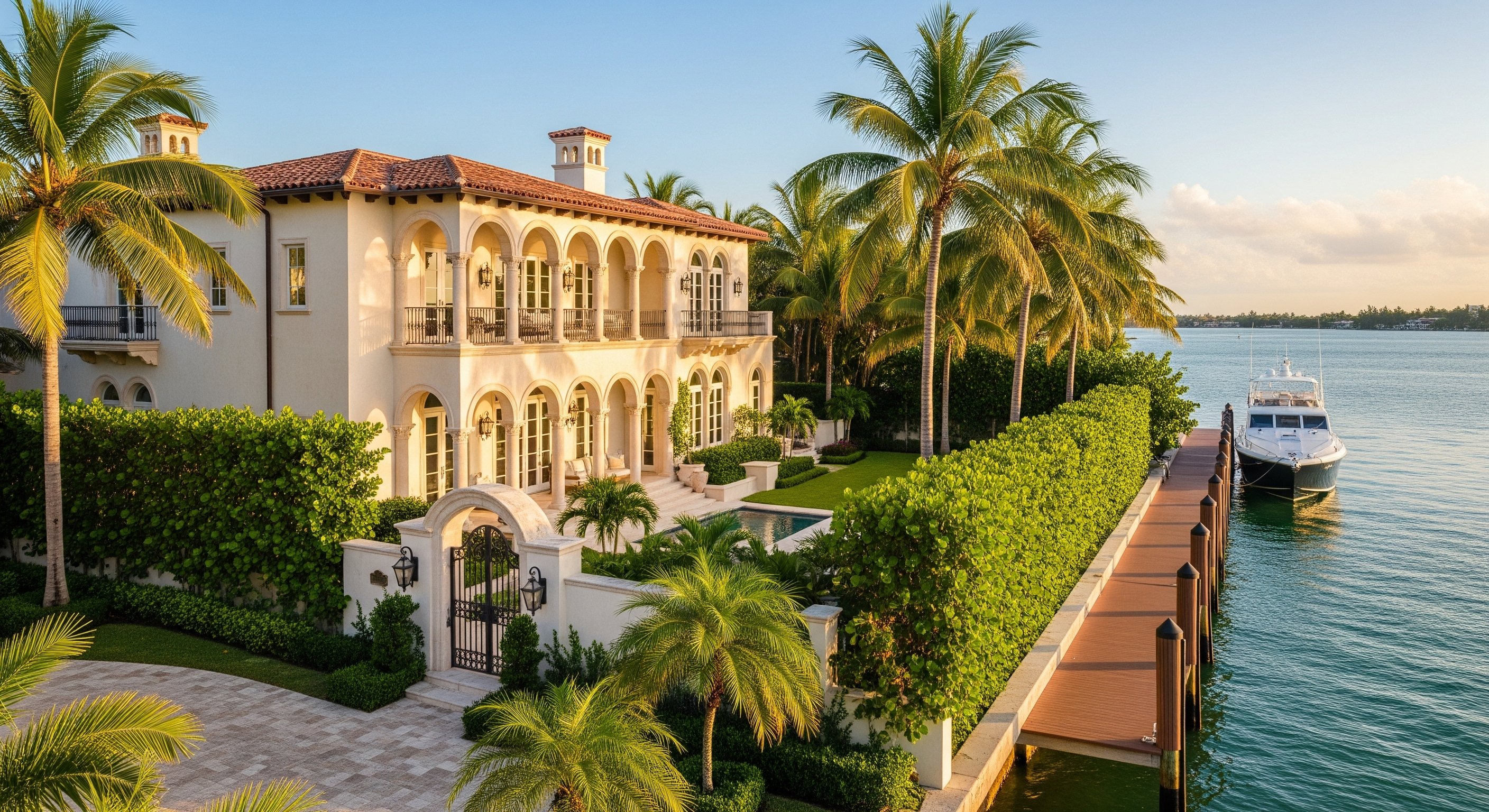
In Coral Gables and Coconut Grove, this hidden layer of the market can be the difference between securing the right home — or missing it entirely.
Our relationships in these communities give our clients access to opportunities that never surface in a Zillow search.
Frequently Asked Questions
Is the Miami real estate market slowing down in 2026? Miami's luxury market remains active, though it has become more selective. Properly priced, well-presented homes in desirable micro-markets continue to attract strong buyer interest. Overpriced listings, however, are sitting longer than they did in 2021–2022. Local expertise in pricing strategy matters more now than it did during the pandemic surge.
What neighborhoods in Miami are best for luxury buyers? Coral Gables, Coconut Grove, Pinecrest, Miami Beach, and Brickell each offer distinct lifestyle profiles. The "best" neighborhood depends entirely on how a buyer wants to live — not just what they want to own.
How do I find off-market homes in Miami? The most reliable path is working with an agent who has deep community ties and a network of trusted colleagues. At VerySpecialHomes.com, off-market access is one of the most consistent advantages we offer our clients.
The Smith Formosa Team specializes in luxury residential real estate in Coral Gables, Coconut Grove, and Miami's most distinctive neighborhoods. Our team brings decades of combined experience to buyers and sellers who demand more than a data-driven estimate.